Preprint
Abstract
Urban megafires cause catastrophic and enduring losses, as burning structures expose and ignite their neighbors. What degree of structure-to-structure exposure triggers self-sustained fire spread under real-world conditions, however, is not well understood. Here, I construct a Structure-to-Structure Exposure Network by measuring geometric coupling between buildings from LiDAR-derived building meshes to assess post-fire damage for 24,771 exposed structures assessed within the perimeters of the 2025 Los Angeles fires. Destruction increased nonlinearly with exposure intensity, as tolerance of hardened building assemblies weakened. Using fire progression reconstruction and an instrumental-variable strategy, I find documented structure-defense actions reduced destruction for targeted structures and down-fire neighbors, consistent with defense removing potential sources of heat and embers. Finally, applying these empirical thresholds in a forward-looking risk assessment identifies at-risk communities across California, where reducing structure-to-structure connectivity may provide greater fire resilience than parcel-level hardening alone.
Selected figures
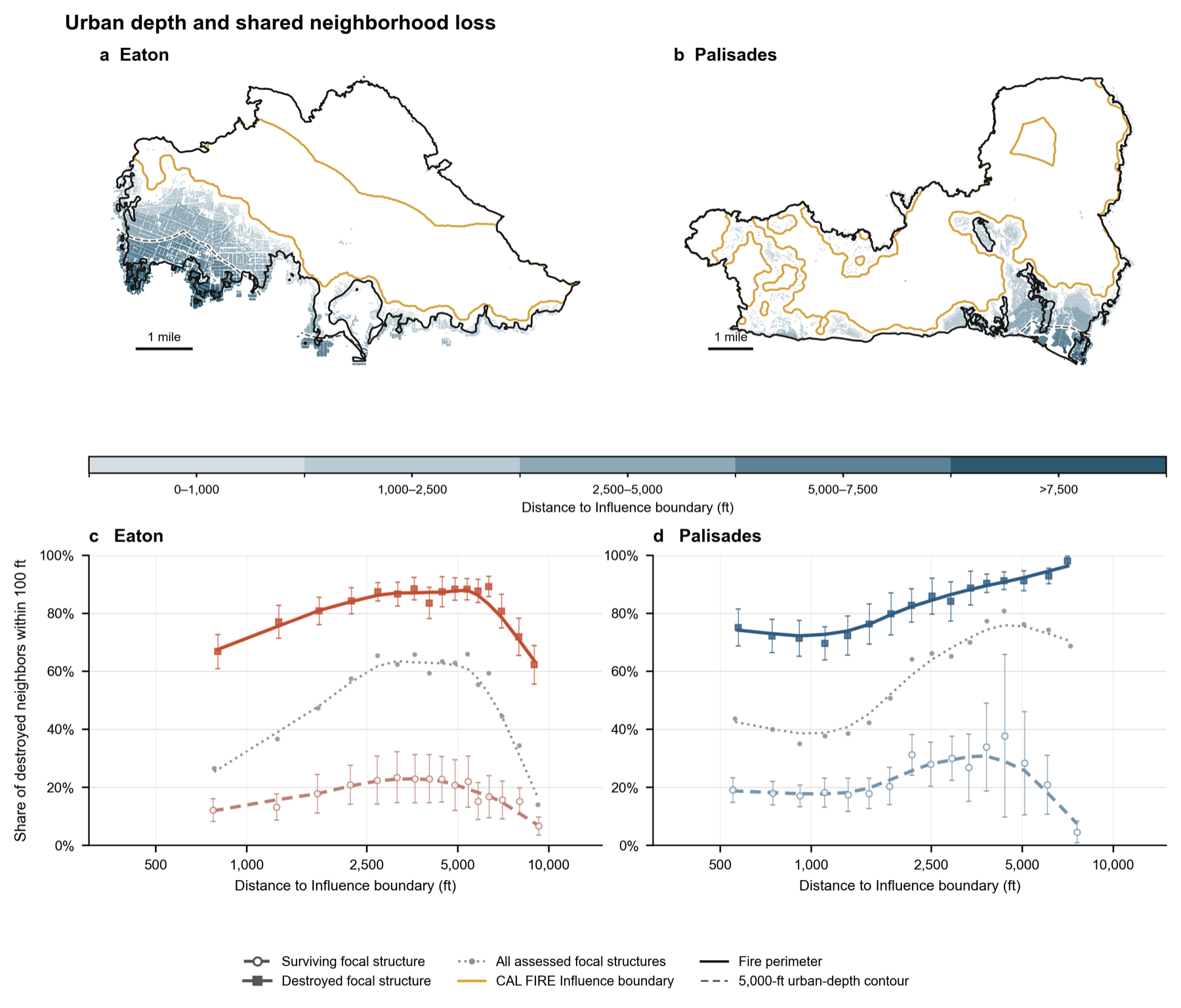
Figure 1. Urban depth and shared neighborhood loss across the Eaton and Palisades fires.
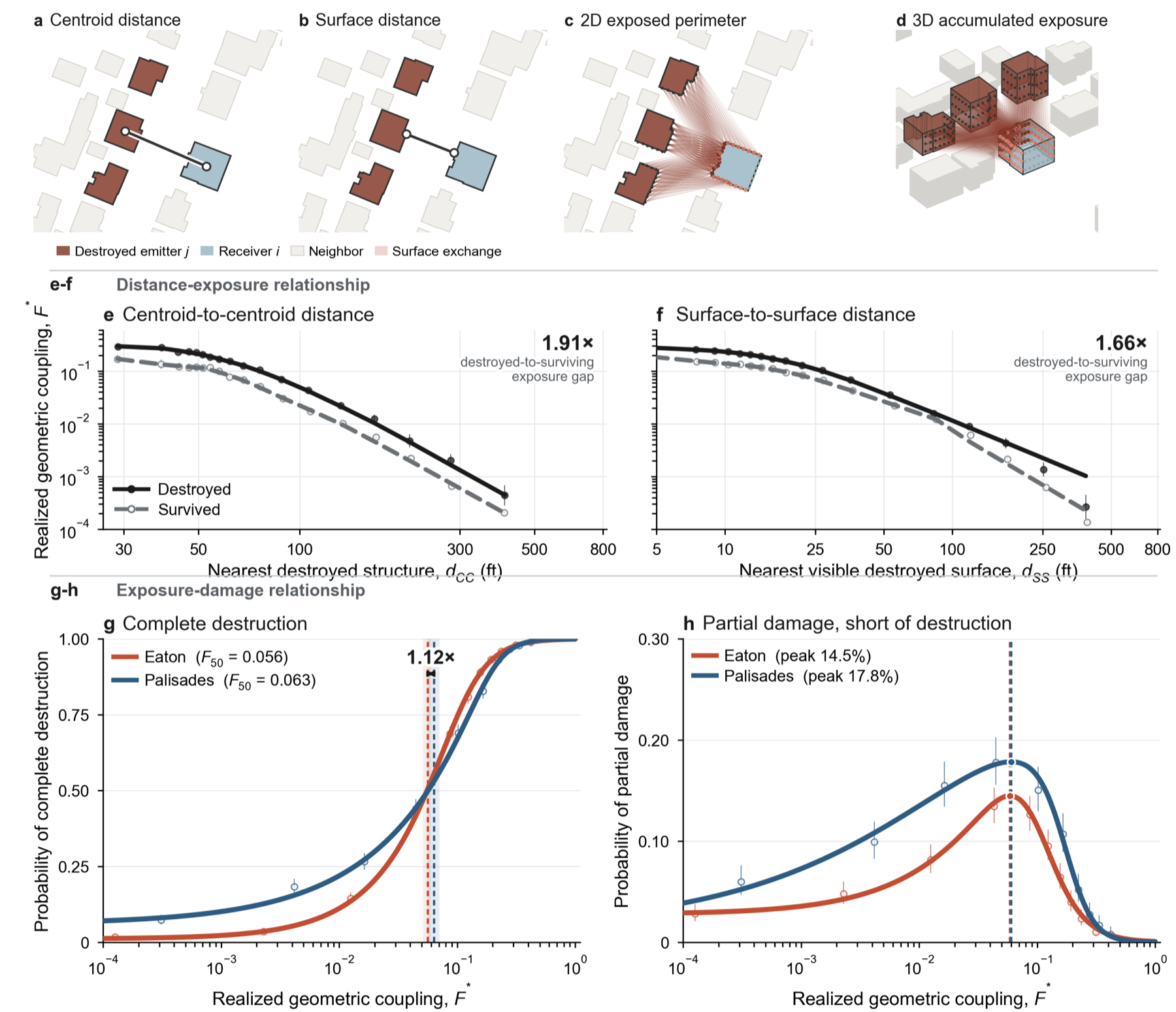
Figure 2. Geometric coupling between structures and its relationship to complete destruction and partial damage.
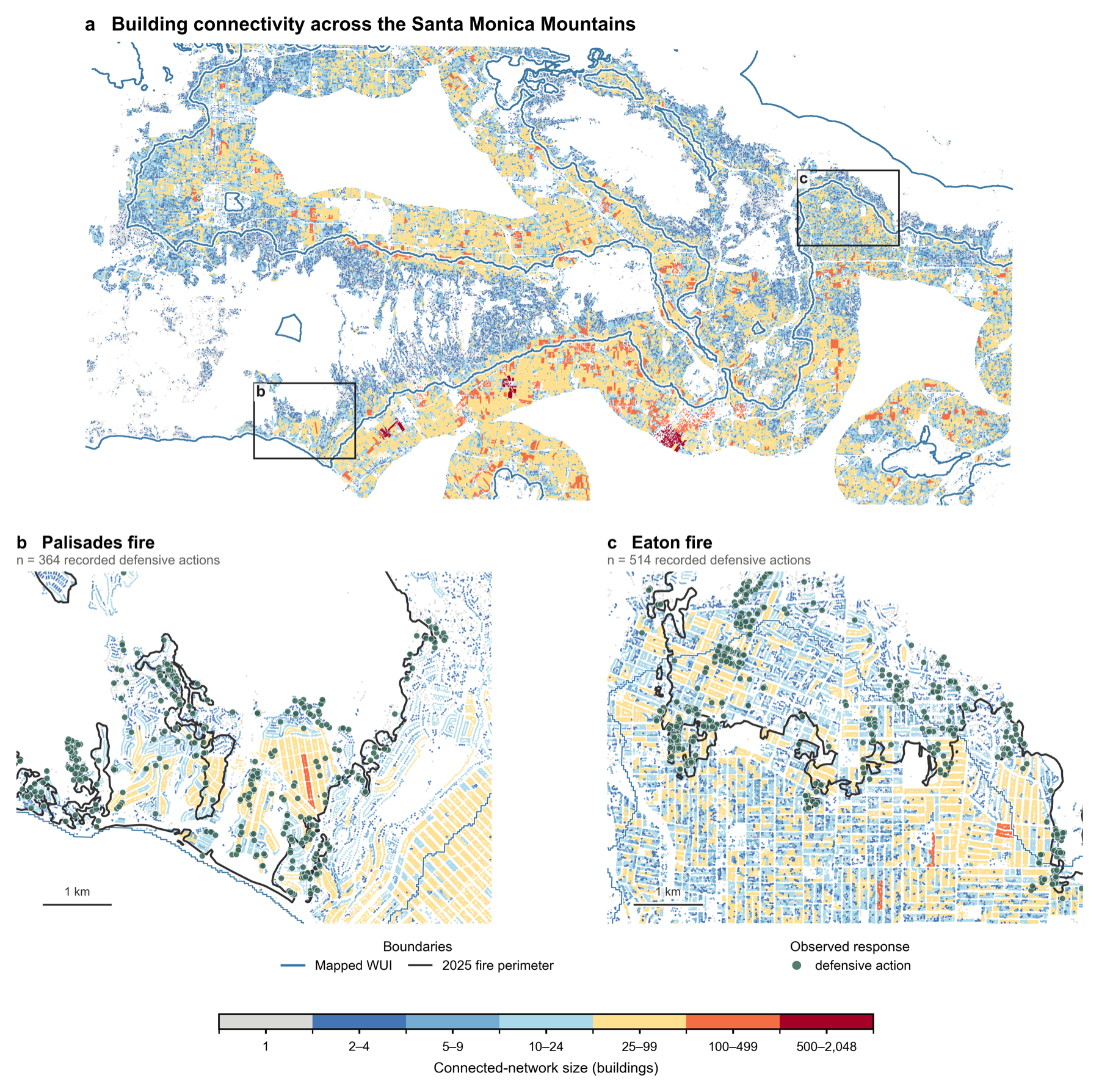
Building connectivity across the Santa Monica Mountains and recorded defensive actions in the Palisades and Eaton fires.
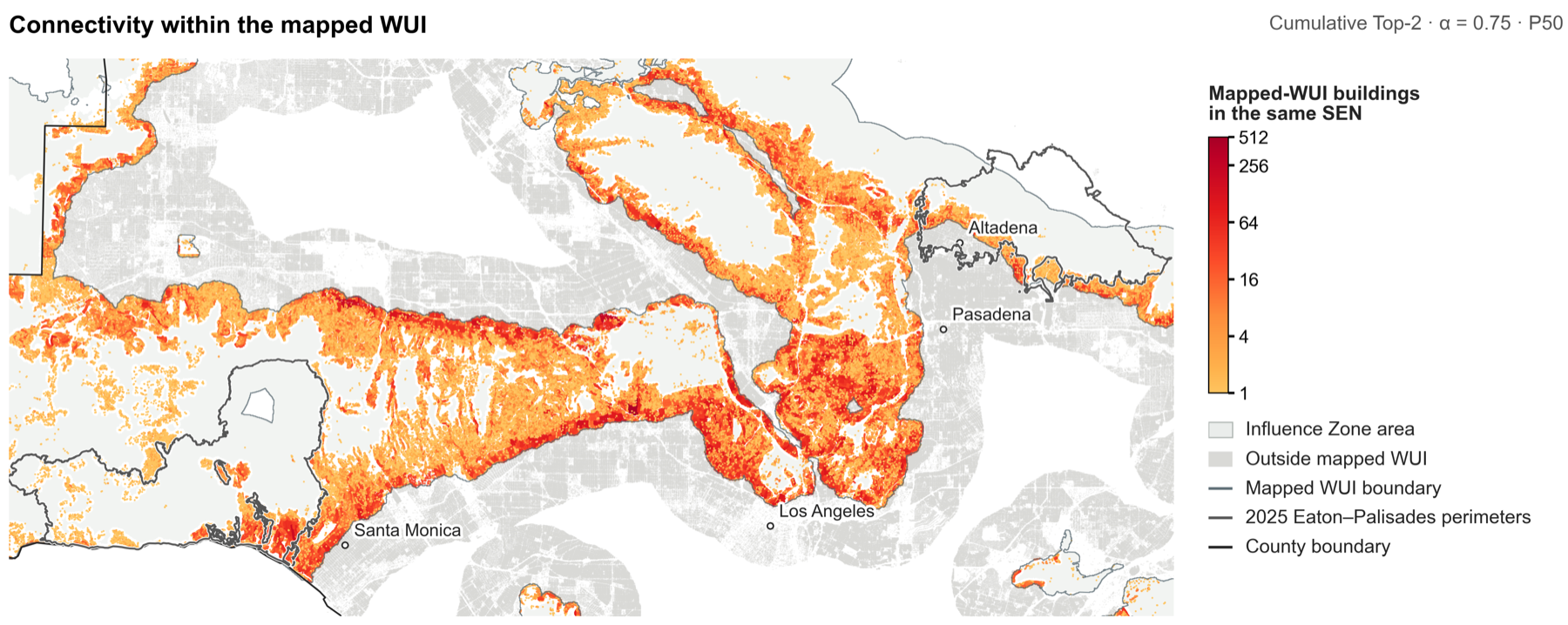
Connectivity within the mapped wildland-urban interface across Los Angeles County.
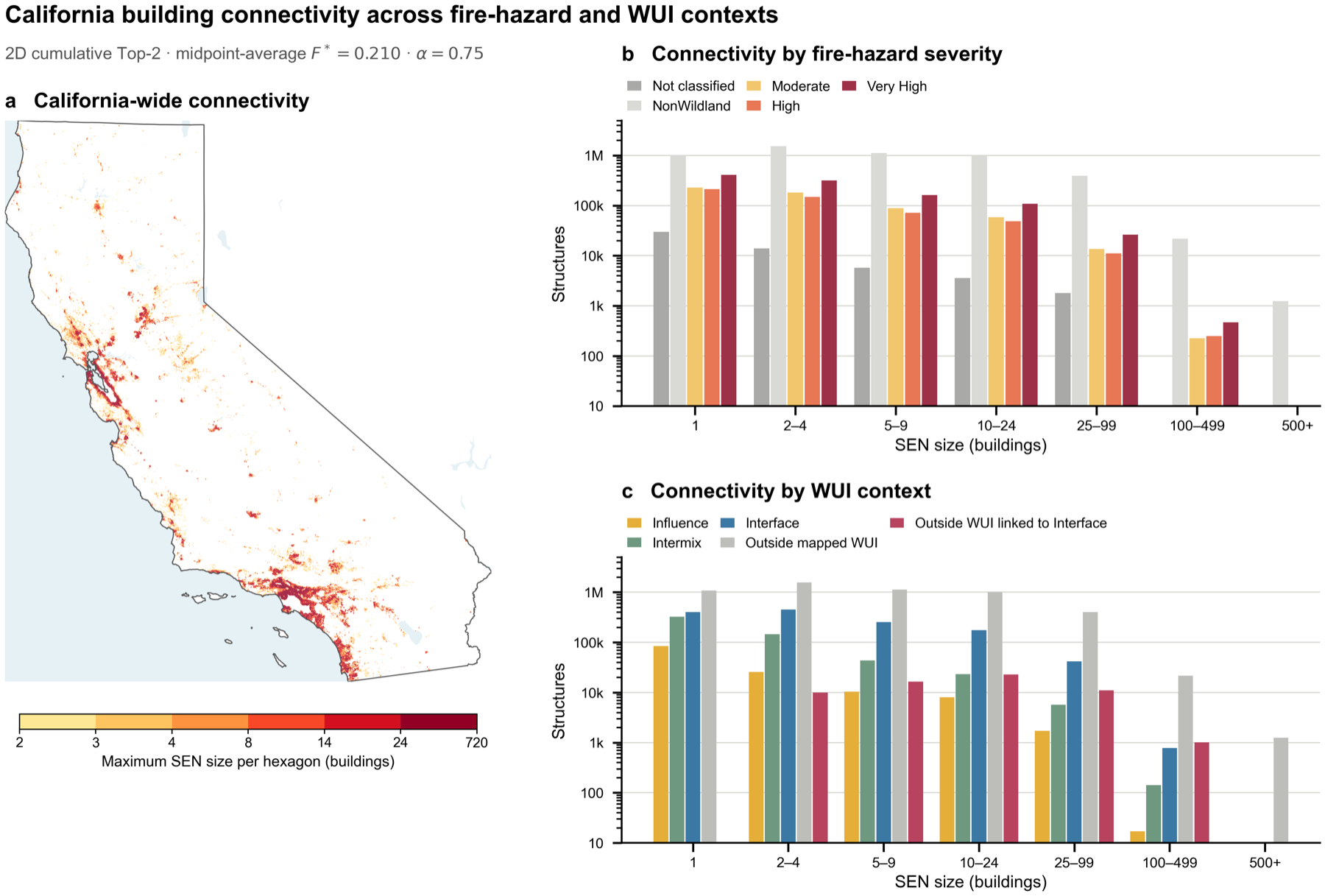
California building connectivity across fire-hazard severity and wildland-urban-interface contexts.
Citation
Swietek, Adam. “Structure-to-Structure Connectivity and Urban Wildfire Destruction Risk in California.” SSRN (2026). https://doi.org/10.2139/ssrn.7590400
@misc{swietek2026connectivity,
    author = {Adam Swietek},
    title = {Structure-to-Structure Connectivity and Urban Wildfire Destruction Risk in California},
    year = {2026},
    publisher = {SSRN},
    doi = {10.2139/ssrn.7590400},
    url = {https://doi.org/10.2139/ssrn.7590400}
}